
Walk into our showroom and one of the first questions we hear is: “Should I go with porcelain or natural stone?” We’ll answer it honestly, and we’ll start by telling you where we stand.
We’re a porcelain house. Our slabs, our countertops, the vast majority of what’s on our floor is porcelain, imported direct from Spain and Italy. We carry natural stone only in small formats and mosaics. So if you want a marble slab countertop, we’re not the ones selling it to you.
That’s exactly why this is worth reading. We have nothing to gain from talking you into either one. Rogelio has spent decades around both materials, and here’s what he’d tell you across the counter.
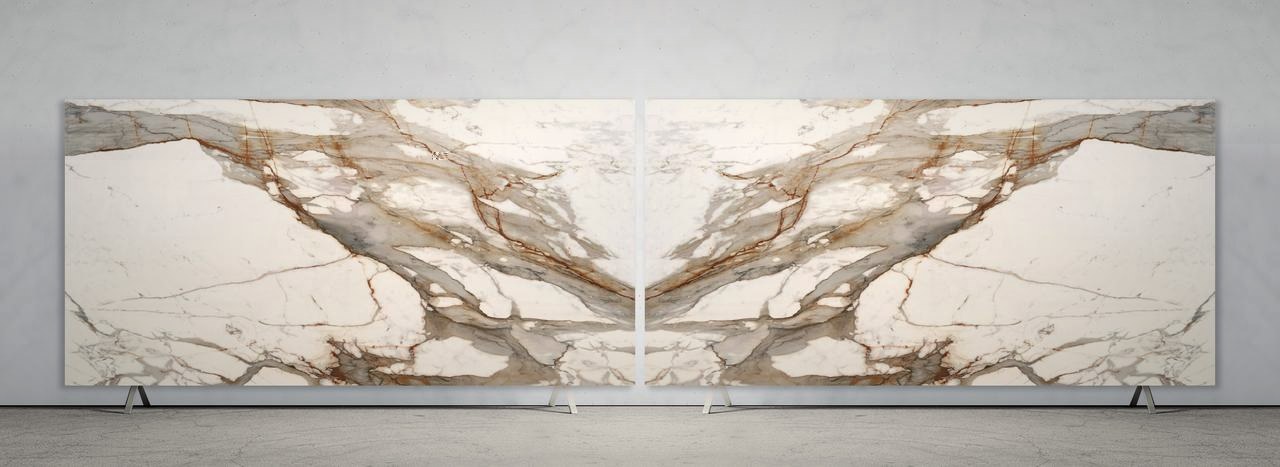
Porcelain: engineered to perform
Porcelain is fired at extreme temperatures, which makes it dense, water-resistant, and nearly impossible to stain. Technically it absorbs less than half a percent of its weight in water, and that single number explains most of its behaviour: it doesn’t drink up spills, it doesn’t hold moisture, and it doesn’t care what the weather is doing.
That’s why designers spec it for kitchens, bathrooms, and busy family homes. Our porcelain collection, hand-picked by Rogelio from leading mills in Italy and Spain, includes large-format slabs, mosaics, and countertop options that arrive in Tampa before the trends do.
Porcelain is the right call when you want marble looks without marble maintenance, floors that shrug off sandy feet and wet paws, and a surface that looks the same in ten years as it does today.
One thing worth asking about: whether a tile is full-bodied, meaning the colour runs all the way through rather than sitting on the surface. If a heavy pan ever chips an edge, a full-bodied tile shows the same colour underneath and the damage nearly disappears. On a glazed tile it shows.
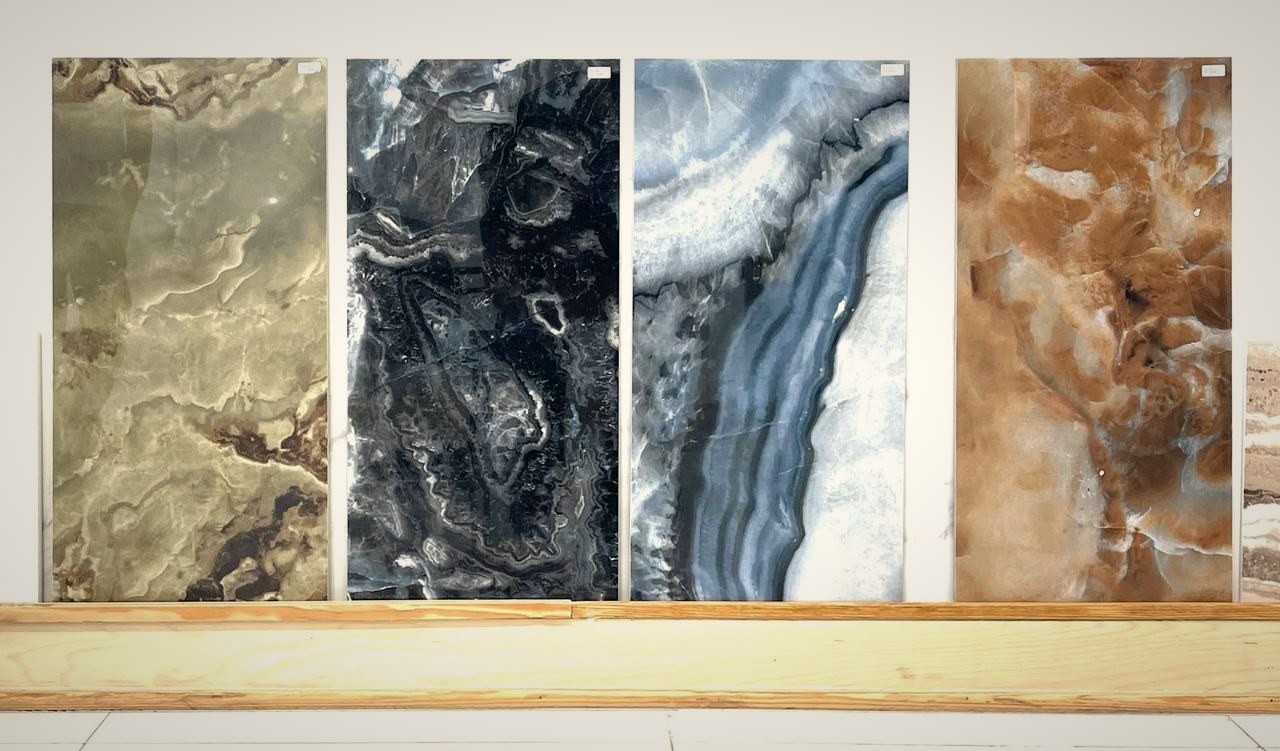
Natural stone: one of a kind, every time
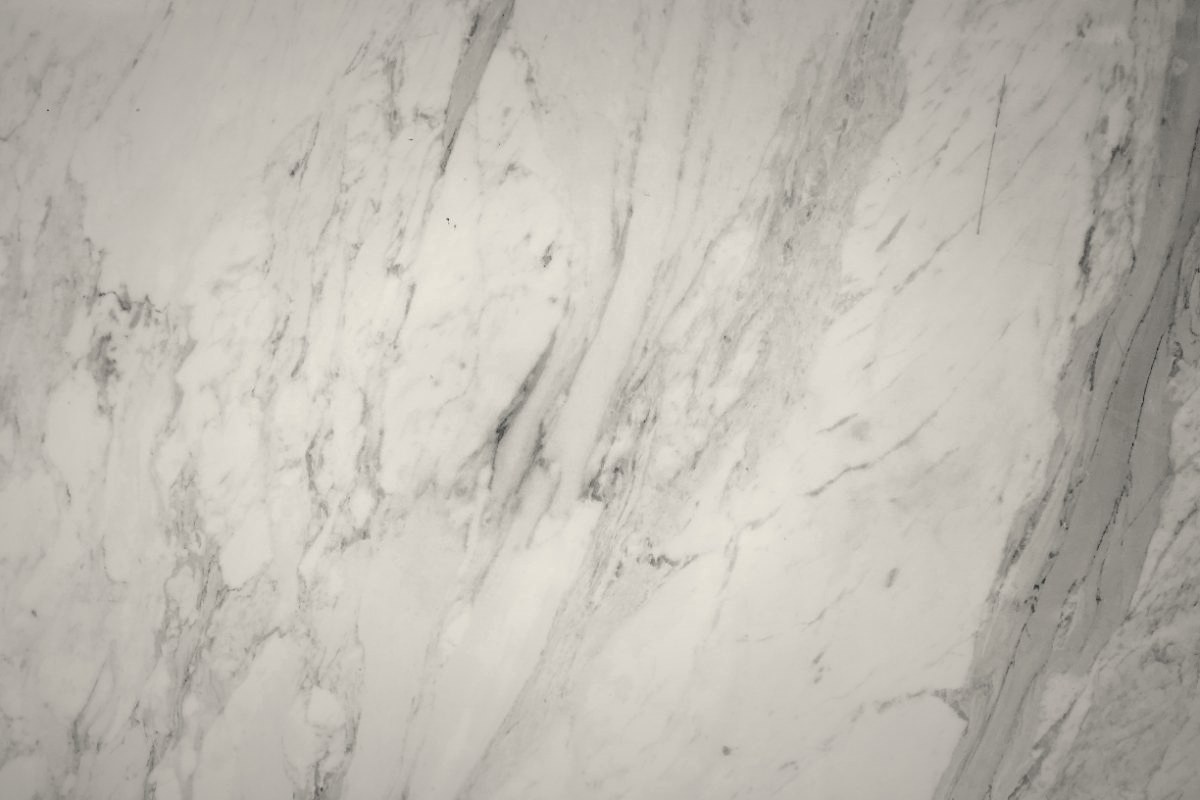
No factory can replicate what the earth does. Every slab of marble or travertine is unique. The veining in your entryway will never exist in anyone else’s home. That’s the appeal, and it’s a real one. Stone turns a floor into a statement.
Stone also asks more of you. It wants sealing when it’s installed and periodically after, and it wants spills wiped up rather than left. Marble and travertine etch, which is worth understanding because people confuse it with staining. A stain is something soaking in. Etching is acid (lemon juice, wine, vinegar, the wrong cleaner) very lightly dissolving the polish and leaving a dull mark. Sealer doesn’t prevent it. Honed and tumbled finishes hide it far better than a high polish does.
If stone is what you want, go and get it from someone who specialises in it. Ask them about finish, about sealing schedule, and about how the slab you’re buying will behave in a Florida house. Those are the right questions.
The Tampa factor

Florida living is hard on floors: humidity, sand, sunscreen, wet swimsuits. Porcelain handles all of it without complaint, which is why it dominates high-traffic Tampa homes. Stone thrives in the rooms you pamper.
Outside is where the difference gets physical. A dark stone pool deck in July is genuinely too hot to stand on; lighter surfaces stay far more comfortable. Porcelain also doesn’t fade under UV, so an outdoor kitchen or lanai looks the same in five summers as it does in its first. And anywhere that gets wet, ask about slip rating rather than eyeballing it. There’s an actual measured standard for it.
So which costs more?
Not the simple answer people expect. Porcelain spans an enormous range, from budget-friendly to more than mid-grade marble. Stone spans a wide range too. The more useful way to think about it is total cost over time: porcelain is close to zero maintenance, while stone carries periodic sealing and a little more care. Neither is automatically the cheap option.
And a piece of advice for either one
Whatever you choose, order at least 10% more than your square footage. Some of it goes to cuts during the job. The rest goes in your garage, because material is made in batches, shade varies between them, and the box you buy two years from now will not match. If a piece ever cracks or a repair is needed, you’ll be very glad the matching material is sitting there. It’s the cheapest insurance in the whole project.
Why Tampa Bay calls us the best tile store around
We’re not the biggest flooring store in Tampa Bay, and we don’t want to be. Rogelio has spent 40+ years in the import business, and every collection on our floor is one he chose himself, not what a big-box algorithm decided would sell. That’s the difference between a tile store and a tile warehouse.
Homeowners searching for a tile store near Tampa usually want the same three things: something they can’t find anywhere else, someone who’ll actually explain the tradeoffs, and a price that fits their project. We built the whole showroom around that: hand-picked porcelain, slabs, and hardwood imported direct from Italy and Spain, with options at every budget, not just the top of it.
Ten years in, we’re still a family business: Rogelio hand-picks the collections, Andrea runs marketing, Mom keeps the office running, and Rodrigo and Christians help every customer who walks through the door. No call centers, no commission pressure. Just people who live in Tampa Bay, helping their neighbors get this decision right.
Porcelain vs. natural stone: frequently asked questions
Is porcelain or natural stone better for a Florida home?
For most Tampa Bay homes, porcelain wins on day-to-day livability. It shrugs off humidity, pool splashes, and sandy feet without sealing or babying. Natural stone can absolutely work here too, especially in lower-traffic rooms, but it asks for more upkeep in a climate that doesn’t let up.
Which is more durable, porcelain or natural stone?
Porcelain is the more forgiving material day to day: dense, hard to stain, and resistant to etching from acidic spills. Natural stone is plenty durable structurally, but its polished surface is more easily dulled by lemon juice, wine, or the wrong cleaner.
Does natural stone cost more than porcelain?
Not automatically. Porcelain spans budget to premium, and so does stone. The bigger cost gap shows up over time: porcelain is close to zero-maintenance, while stone carries periodic sealing and more careful cleaning for the life of the floor.
Do you sell natural stone at Floor Center of Tampa Bay?
We carry natural stone only in small formats and mosaics. Our showroom floor is primarily porcelain, hand-picked and imported direct from Italy and Spain. If a full stone slab is what you’re after, we’ll be straight with you about that and point you to what we do best.
Where is your tile store located, and do I need an appointment?
We’re at 5107 W Idlewild Ave, Suite A, Tampa, FL 33634. Monday–Friday 8–5 and Saturday 9–3. Walk-ins are always welcome, and someone from our family will help you narrow it down.
Come see the porcelain
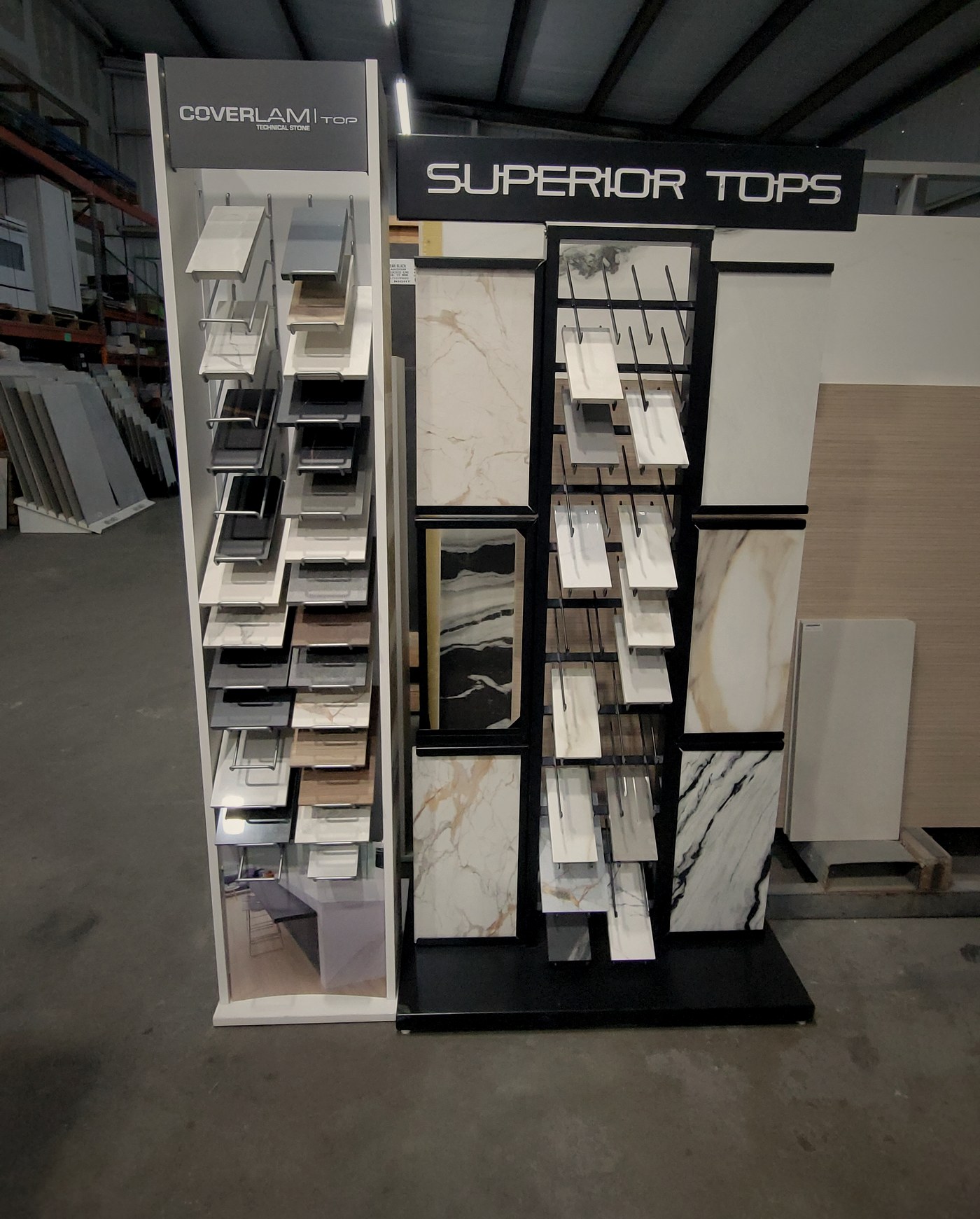
Photos don’t settle this decision. Standing on the tile does. We keep about eighty full-size porcelain slabs standing on our showroom floor, so come and walk around them, and take samples home; look at them in your own light, next to your own cabinets, for a few days. That’s what changes people’s minds, and it costs you nothing.
5107 W Idlewild Ave, Suite A, Tampa, FL 33634. Monday–Friday 8–5, Saturday 9–3. Walk-ins welcome, and someone from our family will help you narrow it down. Hand-picked. Family-run. Tampa Bay.