
Walk into our showroom and ask what we’d put in our own kitchens, and the answer is almost always the same: porcelain. It’s the workhorse of kitchen flooring, beautiful enough for a magazine and tough enough for a Florida household that runs through it fifty times a day. Here’s everything you need to know before choosing porcelain kitchen floor tiles, from the family that hand-picks them for Tampa Bay.
Why porcelain belongs in the kitchen
Kitchens are brutal on floors: dropped pans, spilled sauces, dragged chairs, wet shoes, dog bowls. Porcelain is fired at extreme temperatures, which makes it denser and far less porous than ordinary ceramic. In practice that means it doesn’t stain, doesn’t scratch easily, doesn’t fade in sunlight, and doesn’t care how much you mop it. In Tampa’s humidity, porcelain doesn’t swell or warp. Ever.
The looks you can get
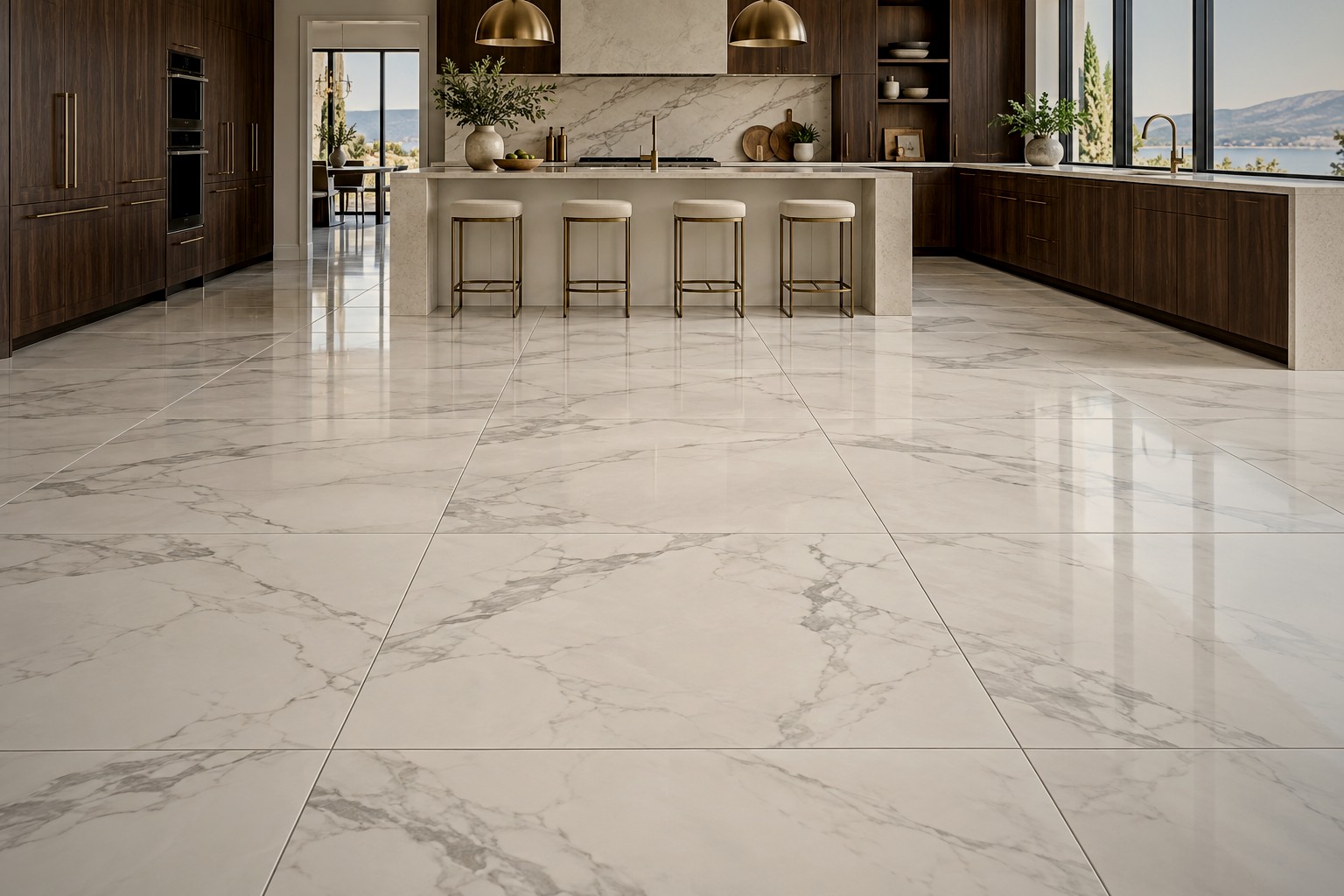
Marble-look: all the drama of Calacatta or travertine veining with none of the sealing and staining worries of real stone. This is our most requested style for open-plan kitchens.
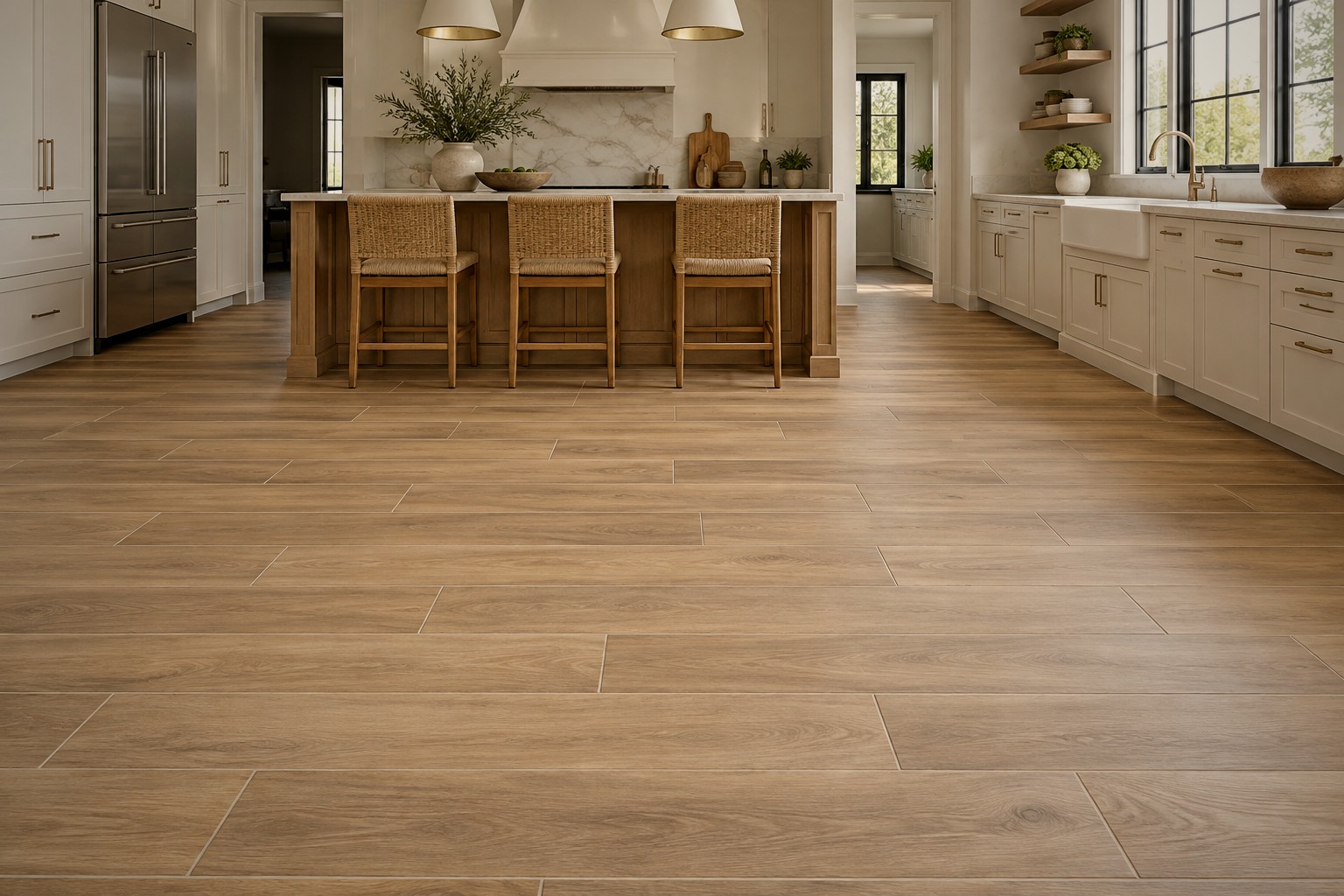
Wood-look planks: the warmth of oak or walnut in a material that laughs at water. Perfect if you want one continuous floor from the living room into the kitchen.
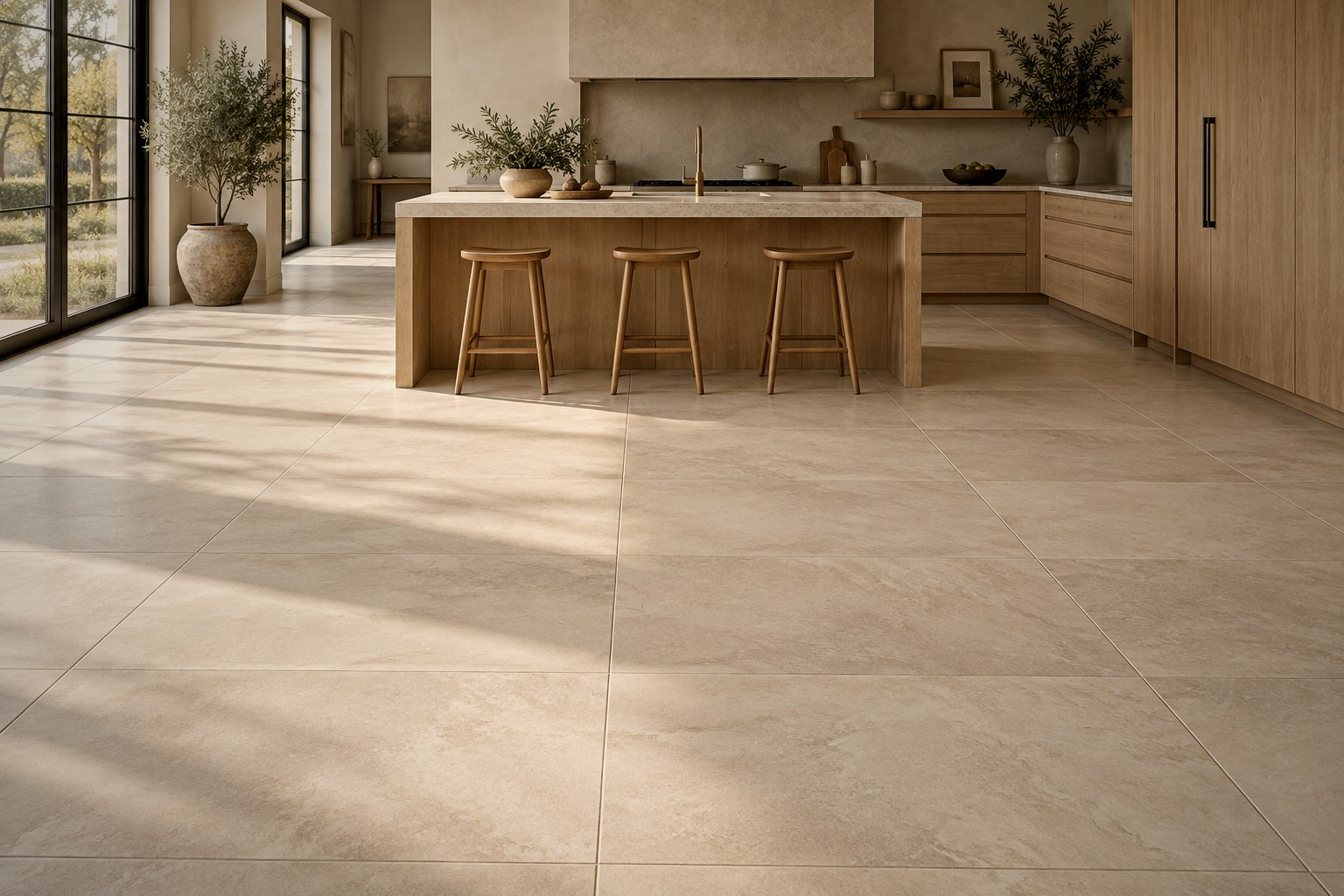
Concrete- and stone-look: clean, modern, and forgiving of crumbs and paw prints between sweeps.
Statement patterns: encaustic-style prints and geometric designs that turn the floor into the room’s personality.
Choosing the right size
Large-format tiles (24×24 and up, or long planks) mean fewer grout lines: a cleaner look and less scrubbing. They make small kitchens feel bigger, too. Smaller formats and mosaics still have their place for texture and grip, especially in busy entry zones. If your kitchen flows into other rooms, running the same large-format tile throughout creates a seamless, high-end feel.
Finish matters: matte vs. polished
For kitchen floors we usually steer families toward matte or satin finishes. They hide smudges, offer better slip resistance when the floor is wet, and still wipe clean easily. Polished porcelain is gorgeous but shows every footprint and gets slick with spills; we recommend saving it for walls and backsplashes.
Grout: the detail that makes or breaks it
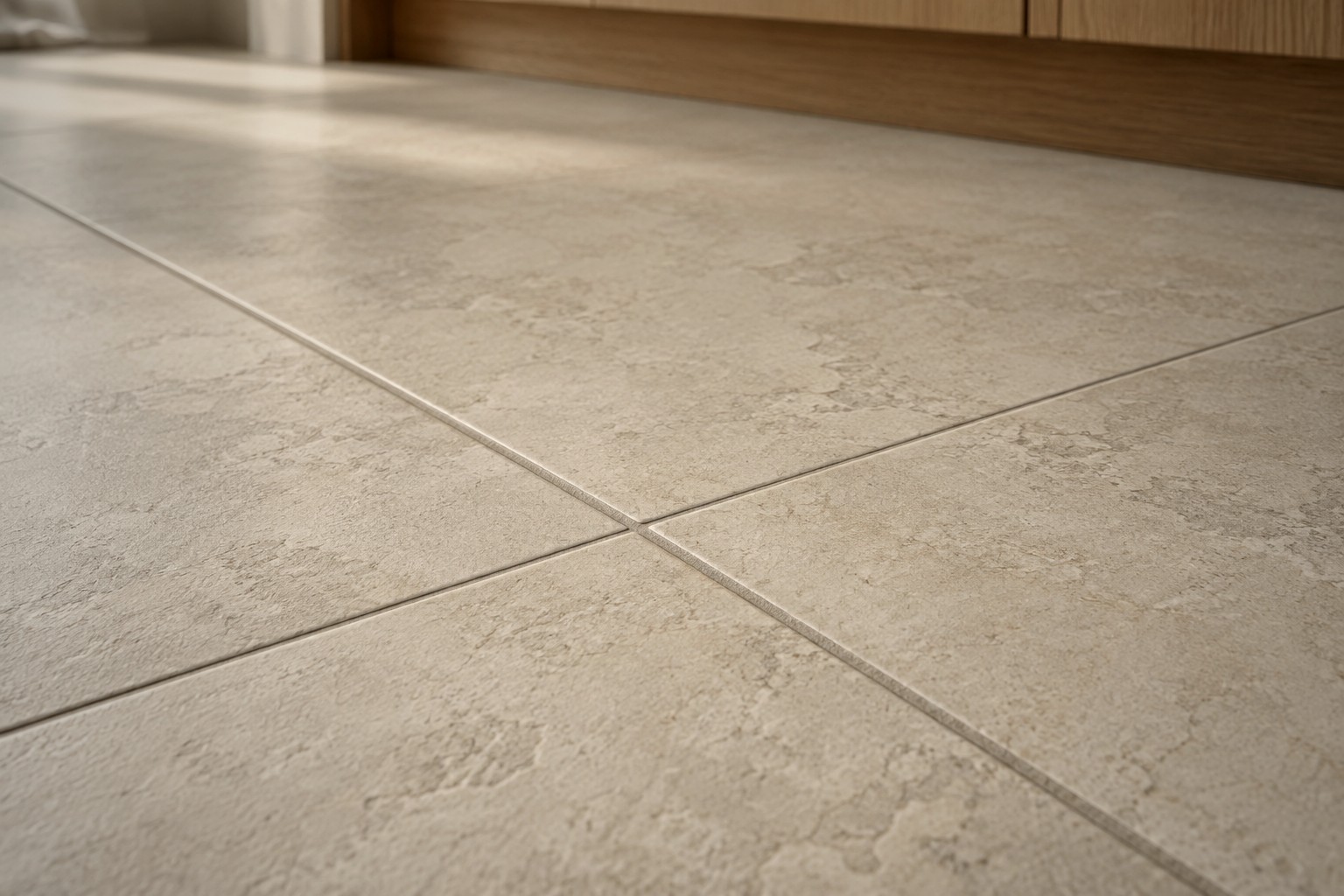
Choose a grout color close to your tile for a seamless look, or contrast it to highlight the pattern. Either way, ask for a quality grout and keep joints tight with rectified tiles. Your future self, sponge in hand, will thank you.
What does it cost?
Porcelain ranges widely, but here’s the honest math: because we import direct from mills in Italy, Spain and beyond, our porcelain often costs less than the big-box stores charge for ordinary ceramic. And since porcelain lasts for decades with almost zero maintenance, the cost per year of ownership is among the lowest of any kitchen floor.
Caring for porcelain kitchen floors
Sweep or vacuum the grit, mop with warm water and a mild cleaner, and that’s genuinely it. No sealing, no waxing, no special products. Wipe spills when you get to them. Porcelain won’t hold a grudge.
Why Tampa Bay comes to us for kitchen tile
Anyone can sell you a box of tile. What’s harder to find is someone who’s actually stood in your kitchen, seen the light, and knows which of the forty porcelain lines on our floor will look right against your cabinets. That’s Rogelio’s job, and he’s been doing it for over 40 years.
We’re a family business, not a franchise. Rogelio hand-picks every collection, Andrea handles the design side, and Rodrigo or Christians will walk the showroom with you in person. It’s part of why homeowners, contractors, and designers keep coming back for their kitchen projects instead of settling for whatever’s in stock at the nearest big-box aisle.
Porcelain kitchen floor tile: frequently asked questions
Is porcelain tile good for kitchen floors?
Yes, it’s one of the best choices for a Florida kitchen. It resists stains, doesn’t scratch easily, and shrugs off the humidity and moisture a kitchen deals with daily.
What’s the best finish for a kitchen floor, matte or polished?
Matte or satin, almost always. Polished porcelain looks stunning but shows footprints and gets slippery when wet, so we save it for backsplashes and walls rather than the floor you’re cooking and spilling on.
How much does porcelain kitchen tile cost?
It varies by collection, but because we import direct from mills in Italy and Spain, our porcelain often costs less than big-box ceramic, and it lasts decades with almost no upkeep.
Can I use the same porcelain on my floor and my island or countertop?
Yes, and it’s one of our favorite looks. Running the same marble-look porcelain across the floor and onto a waterfall island edge makes a space feel custom and cohesive.
Where can I see porcelain kitchen tile in person near Tampa?
At our showroom: 5107 W Idlewild Ave, Suite A, Tampa, FL 33634. Monday through Friday 8 to 5, Saturday 9 to 3. Walk-ins welcome, no appointment needed.
See your kitchen floor in person
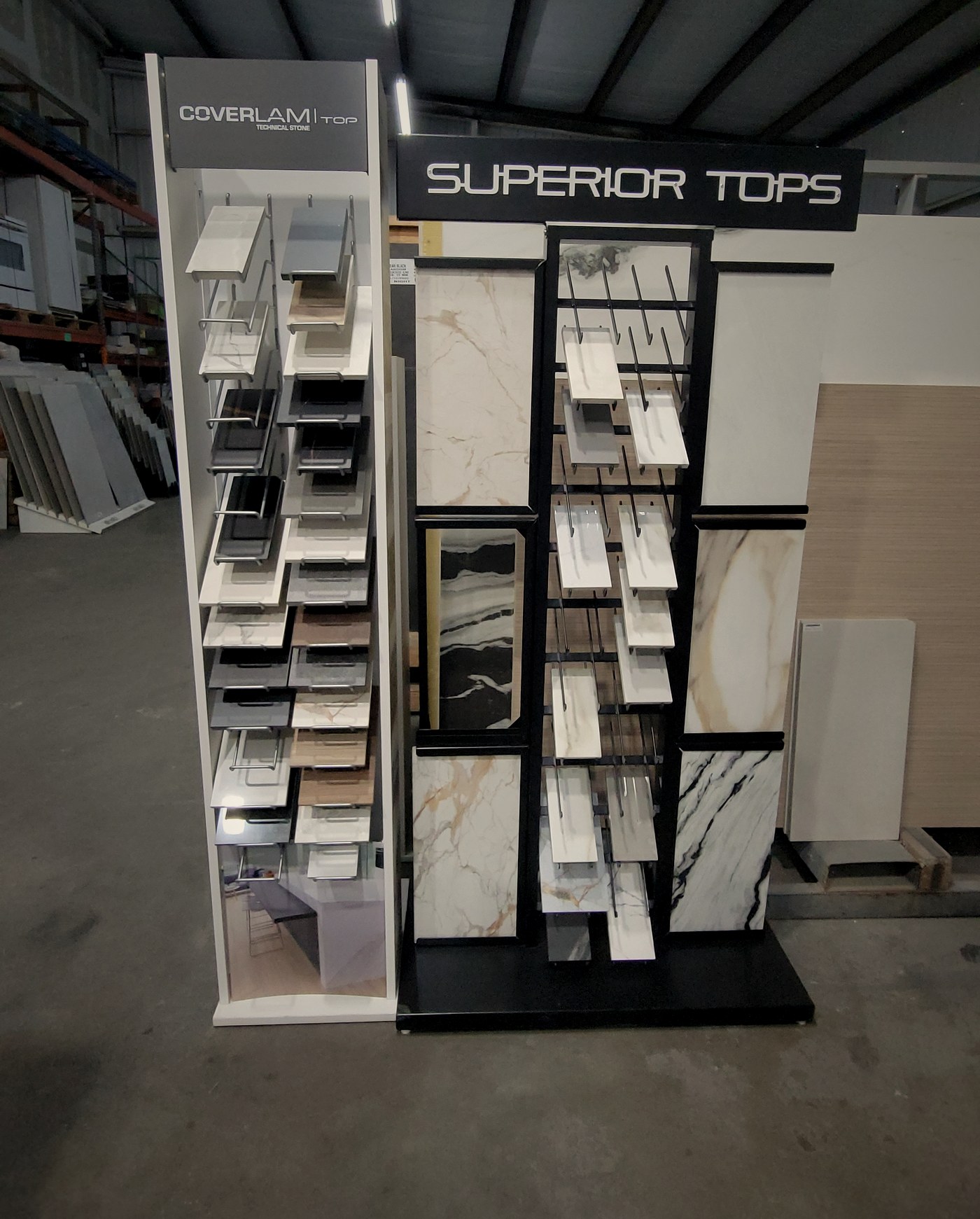
Tile never looks quite the same on a screen as it does under real light, next to your cabinet color. Our Tampa showroom has full-size porcelain displays you can walk on, and samples you can borrow to test against your kitchen. Just bring them back when you’ve decided. Rogelio and the family hand-pick every line we carry, so homeowners, contractors and designers get materials you won’t find on every block.
Visit Floor Center of Tampa Bay at 5107 W Idlewild Ave, Tampa, FL 33634. Walk-ins welcome.
Hand-picked. Family-run. Tampa Bay.